



Calcium Channel
Ca2+ channels; Ca channels
Calcium channel is an ion channel which displays selective permeability to calcium ions. It is sometimes synonymous as voltage-dependent calcium channel, although there are also ligand-gated calcium channels. Voltage-gated calcium (CaV) channels catalyse rapid, highly selective influx of Ca2+ into cells despite a 70-fold higher extracellular concentration of Na+. Some calcium channel blockers have the added benefit of slowing your heart rate, which can further reduce blood pressure, relieve chest pain (angina) and control an irregular heartbeat.
Calcium Channel Isoform Specific Products
All Product Categories
-
Calcium Channel Inhibitors
(583)
View all products
-
Calcium Channel Agonists
(35)
View all products
-
Calcium Channel Antagonists
(210)
View all products
-
Calcium Channel Activators
(86)
View all products
-
Calcium Channel Modulators
(46)
View all products
-
Calcium Channel Chemical
(1)
View all products
-
Calcium Channel Inducers
(11)
View all products
-
Calcium Channel Controls
(10)
View all products
-
Calcium Channel Ligands
(7)
View all products
-
Calcium Channel Related Products (1225)
Related Products (1225)

-
Antibodies (29)
-
Related Compound Screening Libraries (1)
-
Calcium Channel Isoform Comparison
-
Carboxyatractyloside dipotassium (Standard)
 0 ImagesCat. No.: HY-N2522RCAS No.: 33286-30-5Synonyms: Gummiferin dipotassium (Standard)Carboxyatractyloside (dipotassium) (Standard) is the analytical standard of Carboxyatractyloside dipotassium (HY-N2522). This product is intended for research and analytical applications. Carboxyatractyloside dipotassium is a diterpenoid. Carboxyatractyloside dipotassium can be isolated from plants of the genus Xanthium. Carboxyatractyloside dipotassium is an ADP/ATP carrier inhibitor, inhibiting mitochondrial ADP/ATP transport. Carboxyatractyloside dipotassium promotes ROS production, induces Ca2+ release, and leads to mitochondrial dysfunction. Carboxyatractyloside dipotassium induces lethargy, weakness, and epileptic seizures in rats.
-
Nicardipine (Standard)
 0 ImagesSynonyms: YC-93 free base (Standard)Nicardipine (Standard) is the analytical standard of Nicardipine. This product is intended for research and analytical applications. Nicardipine (YC-93 free base) is a calcium channel blocker with an IC50 of 1 μM for blocking cardiac calcium channels. Nicardipine acts as an agent for chronic stable angina and for controlling blood pressure.
-
Psoralenoside (Standard)
 0 ImagesCat. No.: HY-N7503RCAS No.: 905954-17-8Psoralenoside is a benzofuran glycoside from Psoralea corylifolia. Psoralenoside exhibits high binding affinities against histaminergic H1, calmodulin, and voltage-gated L-type calcium channels (E-value≥-6.5 Kcal/mol). Psoralenoside shows estrogen-like activity, osteoblastic proliferation accelerating activity, antitumor effects and antibacterial activity.
-
Diltiazem (Standard)
 0 ImagesDiltiazem (Standard) is the analytical standard of Diltiazem. This product is intended for research and analytical applications. Diltiazem is an orally active L-type Ca2+ channel blocker. Diltiazem shows antihypertensive and antiarrhythmic effects. Diltiazem can be used for the research of cardiac arrhythmia, hypertension, and angina pectoris.
-
NAADP receptor modulator-1
 0 ImagesCat. No.: HY-121253CAS No.: 854091-96-6NAADP receptor modulator-1 is a cell-permeable NAADP receptor modulator. NAADP receptor modulator-1 competes with NAADP for binding sites and inhibits NAADP-induced Ca2+ release.
-
Verticilide
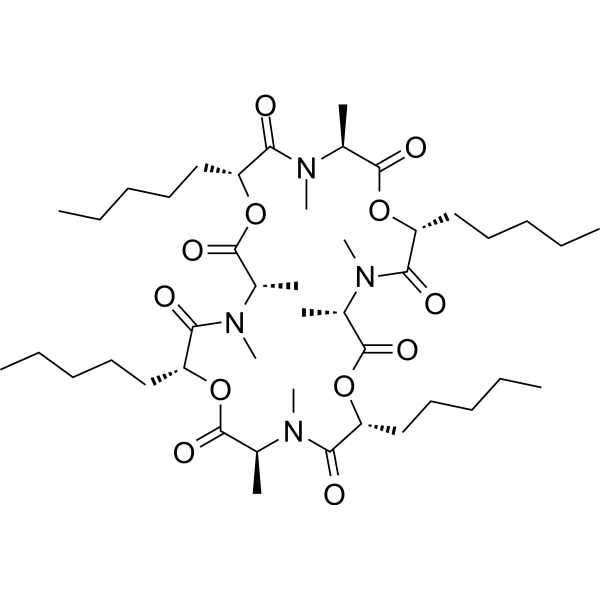 0 ImagesCat. No.: HY-N7491CAS No.: 693778-57-3Verticilide is a ryanodine-binding inhibitor and inhibits ryanodine binding to ryanodine receptors in the cockroach at an IC50 value of 4.2 μM (whereas inhibition against mouse ryanodine receptors was weak (IC50=53.9 μM)).
-
1-Octanol-d2-1
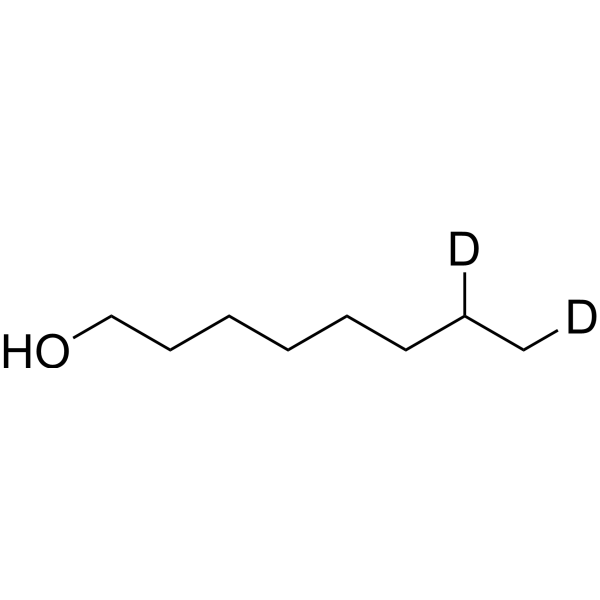 0 ImagesCat. No.: HY-W032013S2CAS No.: 1335435-64-7Synonyms: Octanol-d2-11-Octanol-d2-1 is deuterated labeled 1-Octanol (HY-W032013). 1-Octanol (Octanol), a saturated fatty alcohol, is a T-type calcium channels (T-channels) inhibitor with an IC50 of 4 μM for native T-currents. 1-Octanol is a highly attractive biofuel with diesel-like properties.
-
Bay K 8644 (Standard)
 0 ImagesSynonyms: (±)-Bay K 8644 (Standard)Bay K 8644 (Standard) is the analytical standard of Bay K 8644. This product is intended for research and analytical applications. Bay K 8644 ((±)-Bay K 8644) is a racemate consisting of two isomers (R)-(+)-Bay-K-8644 and (S)-(-)-Bay-K-8644. Bay K 8644 is a L-type Ca2+ channel agonist with an EC50 of 17.3 nM. Bay K 8644 increases Ca2+ influx through sarcolemmal Ca2+ channels by increasing the open time of the channel. Bay K 8644 has vasoconstrictive effects.

-
Manidipine-d4
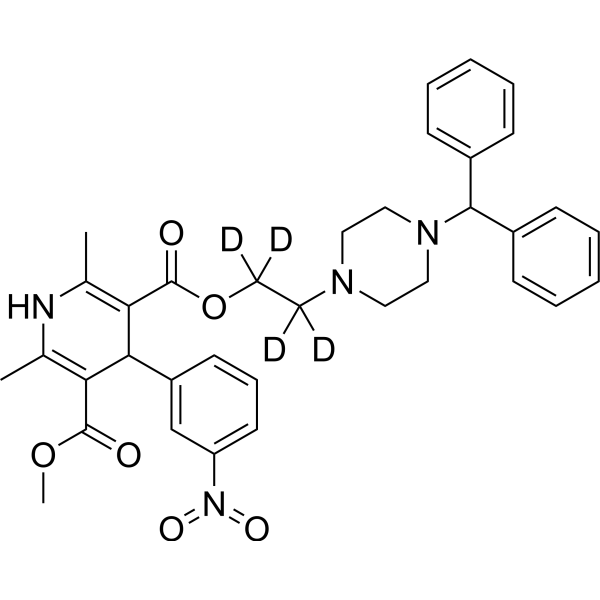 0 ImagesCat. No.: HY-B0419SCAS No.: 1189656-59-4Manidipine-d4 is the deuterium labeled Manidipine (HY-B0419). Manidipine is an orally active calcium channel antagonist. Manidipine regulates the expression of cytokines (IL-1β, IL-6). Manidipine has a hypotensive effect. Manidipine can be used in the study of cardiovascular diseases (such as hypertension, myocardial ischemia-reperfusion injury, ventricular hypertrophy), kidney diseases (such as glomerular diseases), and epilepsy.
-
Clonixin (Standard)
 0 ImagesSynonyms: SCH-10304 (Standard)Clonixin (SCH-10304) (Standard) is the analytical standard of Clonixin. This product is intended for research and analytical applications. Clonixin is an orally active non-steroidal anti-inflammatory agent (NSAID) that inhibits COX synthesis. Clonixin acts as a voltage-gated L-type calcium channel blocker, exerts vasodilatory effects by antagonizing Ca2+ in vascular smooth muscle. Clonixin inhibits TGF-β, reduces lung coefficient, immune cell infiltration level, oxidative stress response, airway resistance, hydroxyproline content and collagen deposition. Clonixin can be used in research related to inflammation such as idiopathic pulmonary fibrosis and moderate to severe pain.
-
Isradipine (Standard)
 0 ImagesSynonyms: PN 200-110 (Standard)Isradipine (Standard) is the analytical standard of Isradipine. This product is intended for research and analytical applications. Isradipine (PN 200-110) is an orally active L-type calcium channel blocker. Isradipine, as a powerful peripheral vasodilator, is a dihydropyridine calcium antagonist with selective actions on the heart as well as the peripheral circulation. Isradipine is a potentially viable neuroprotective agent for Parkinson's disease.
-
Norverapamil-d6 hydrochloride
 0 ImagesCat. No.: HY-W699430CAS No.: 1329651-21-9Synonyms: (±)-Norverapamil-d6 hydrochloride; D591-d6 hydrochlorideNorverapamil-d6 ((±)-Norverapamil-d6) hydrochloride is deuterium labeled Norverapamil (hydrochloride). Norverapamil hydrochloride ((±)-Norverapamil hydrochloride), an N-demethylated metabolite of Verapamil, is a L-type calcium channel blocker and a P-glycoprotein (P-gp) function inhibitor.
-
Ranolazine (Standard)
 0 ImagesCat. No.: HY-B0280RCAS No.: 95635-55-5Synonyms: CVT 303 (Standard); RS 43285-003 (Standard)Ranolazine (Standard) is the analytical standard of Ranolazine. This product is intended for research and analytical applications. Ranolazine (CVT 303) is an anti-angina drug that achieves its effects by inhibiting the late phase of inward sodium current (INa and IKr with IC50 values of 6 μM and 12 μM, respectively) without affecting heart rate or blood pressure (BP). Ranolazine is also a partial fatty acid oxidation (FAO) inhibitor. Antianginal agent.
-
Sadopine
 0 ImagesCat. No.: HY-120411CAS No.: 111127-62-9Sadopine is an allosteric modulator for dihydropyridine receptor ((-)Sadopine as positive allosteric modulator and (+)Sadopine as negative allosteric modulator). Sadopine interacts with dihydropyridine (DHP)-sensitive L-type calcium channels.
-
Ro 18-3981
 0 ImagesCat. No.: HY-117055CAS No.: 103295-92-7Ro 18-3981 is a dihydropyridine that inhibits cardiac Ca2+ channels. Ro 18-3981 shows higher inhibitory activity when the cell membrane is in a depolarized state (Vh=-20 mV: IC50=2.3 nM; Vh=-50 mV: IC50=100 nM).

-
BODIPY FL Thapsigargin
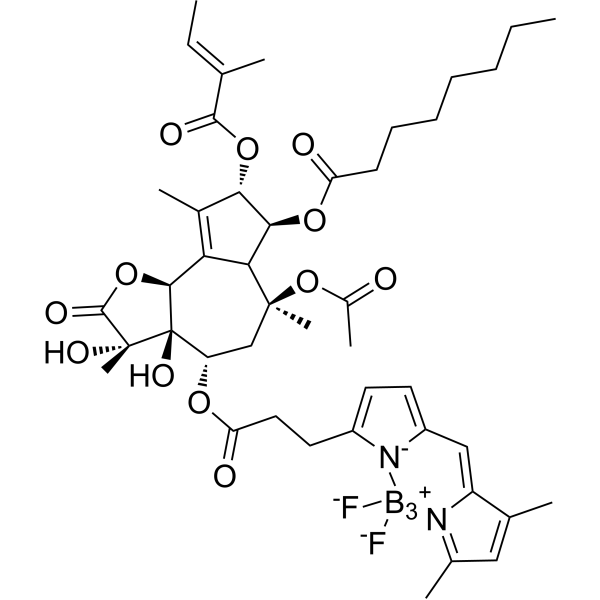 0 ImagesCat. No.: HY-D1608CAS No.: 216571-99-2BODIPY FL Thapsigargin is a potent green fluorescent dye. BODIPY FL Thapsigargin inhibits intracellular SERCA-type Ca2+ pumps present in the sarcoplasmic/endoplasmic reticulum. BODIPY FL Thapsigargin used for investigation of thapsigargin binding sites in live cells.
-
PDDHV
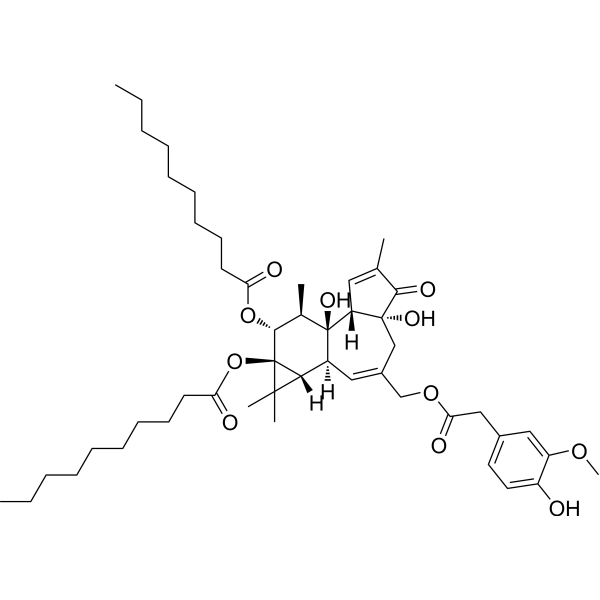 0 ImagesCat. No.: HY-130358CAS No.: 179469-40-0PDDHV is a calcium absorption inducer and may achieve 45Ca2+ influx by stimulating vanillic acid receptor VR1. PDDHV induces 45Ca2+ uptake (EC50: 70 nM) in rat dorsal root ganglion neurons (expressing native vanilloid receptors) and calcium mobilization (EC50: 125 nM) in VR1-transfected CHO cells. PDDHV also inhibits [3H]-resiniferatoxin (RTX) binding to the dorsal root ganglion membrane in rats.
-
Diltiazem-d6 hydrochloride
 0 ImagesCat. No.: HY-14656S2CAS No.: 1309283-34-8Synonyms: CRD-401-d6 hydrochlorideDiltiazem-d6 (hydrochloride) (CRD-401-d6 (hydrochloride)) is deuterium labeled Diltiazem (hydrochloride). Diltiazem hydrochloride is a Ca2+ influx inhibitor (slow channel blocker or calcium antagonist).




